
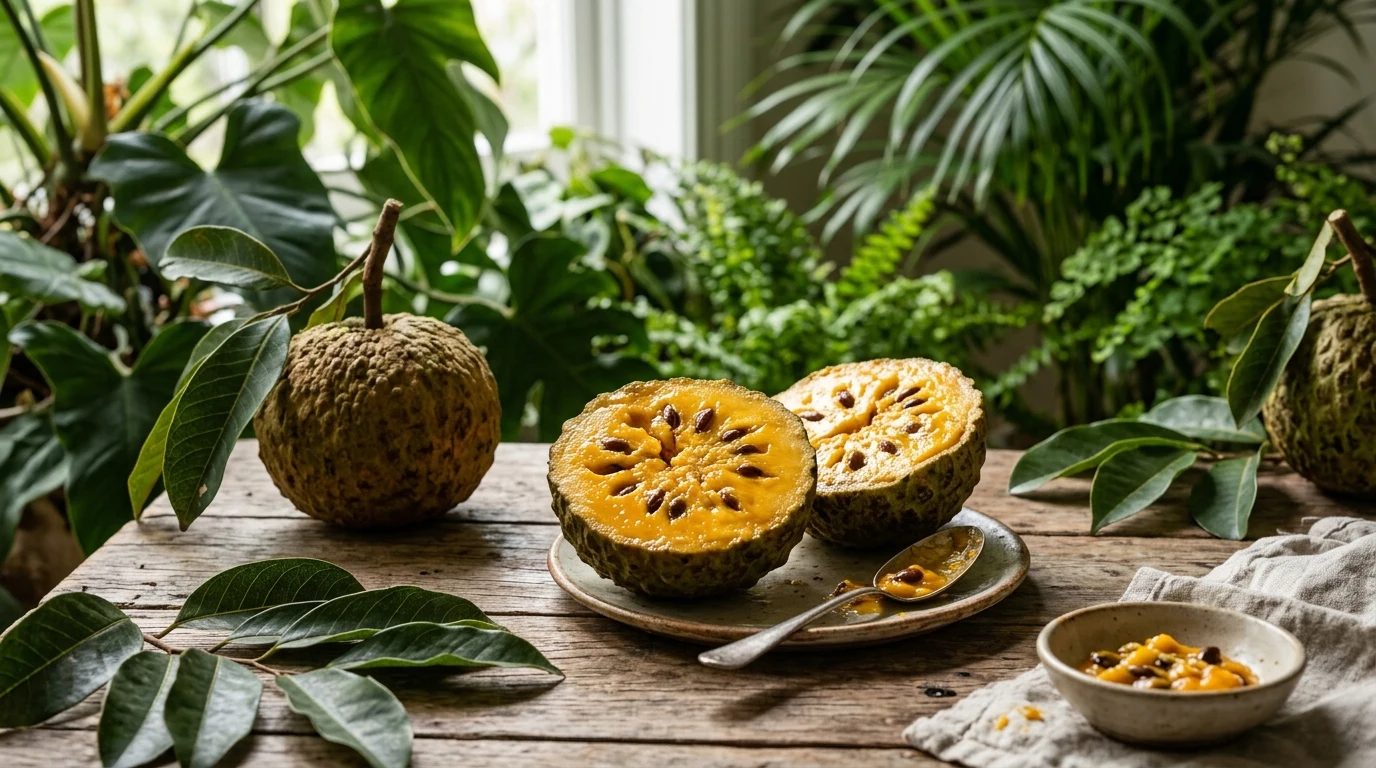
Argumento Fruit (Araticum): Botanical Profile, Flavor, and Nutritional Power
✨ This article was AI edited. Editorial responsibility: GarlicFruit.com.
The legendary argumento fruit—botanically classified as Annona crassiflora and universally celebrated across Brazil’s Cerrado biome as Araticum, Marolo, or Panã—is one of South America’s most magnificent and enigmatic wild superfoods. Nicknamed in regional folklore as the “fruit of argument” due to the spirited, passionate debates it sparks among foragers regarding its unique, multi-layered flavor profile and wild aroma, this wild native custard apple represents a botanical powerhouse of antioxidants, dietary fiber, and tropical culinary heritage.
Contents
- Botanical Classification and Cerrado Ecosystem Origins
- The “Fruit of Argument”: Flavor Profile and Sensory Complexity
- Nutritional Biochemistry: Why Araticum Is a Functional Superfood
- Ethnobotanical Heritage & Agroforestry Sustainability
- Cultivar Phenotypes: Sweet Yellow vs. Tart Pink Araticum
- Traditional Culinary Preparations
- Frequently Asked Questions
Botanical Classification and Cerrado Ecosystem Origins
Annona crassiflora belongs to the Annonaceae family, sharing taxonomic kinship with soursop (Annona muricata), cherimoya (Annona cherimola), and sugar apple (Annona squamosa). However, unlike its rainforest relatives, the araticum tree has evolved remarkable ecological adaptations to survive the harsh dry seasons and nutrient-poor acidic soils of the Brazilian savanna (Cerrado):
- Xylopodium Root Adaptations: The tree develops a deep subterranean woody root structure capable of accessing deep groundwater tables during 6-month droughts.
- Massive Syncarp Fruit Structure: The fruit is a massive compound berry (syncarp) weighing between 1.5 to 4.5 kg (3.3 to 10 lbs). The exterior is covered in a thick, rough, tessellated brownish-green rind with pyramidal scaly plates.
- Pulp Dimorphism: Inside, the fruit contains hundreds of large dark seeds surrounded by fleshy, aromatic pulp that occurs in two distinct natural phenotypes: sweet yellow/golden pulp and slightly tart white/pinkish pulp.
| Nutritional Metric (per 100g) | Araticum / Argumento Pulp | Cultivated Soursop (Guanabana) | Cherimoya (Custard Apple) |
|---|---|---|---|
| Dietary Fiber | 6.8 g (High prebiotic fraction) | 3.3 g | 3.0 g |
| Total Carotenoids (Pro-Vit A) | 2.9 mg (Beta-carotene dominant) | 0.02 mg | 0.05 mg |
| Vitamin C (Ascorbic Acid) | 32.5 mg (40% DV) | 20.6 mg | 12.6 mg |
| Total Polyphenols | 245 mg GAE | 110 mg GAE | 95 mg GAE |
| Active Acetogenins | High (annonacin derivatives) | Moderate | Moderate |
The “Fruit of Argument”: Flavor Profile and Sensory Complexity
Why do foragers and culinary historians dub araticum the “fruit of argument”? When fully ripe, the fruit produces an intensely diffusive, tropical aroma that can perfume an entire room within minutes. Its taste profile is a captivating sensory paradox:
- Initial Palate: Creamy, velvety custard texture with deep tropical sweetness reminiscent of ripe mango, sweet papaya, and cooked banana.
- Mid-Palate Notes: Bright, acidic tropical undertones evoking passion fruit, pineapple, and sour citrus.
- Finish: A distinct, lingering botanical earthiness with subtle hints of fermented resin and wild honey. For first-time tasters, this intricate harmony of sweet, sour, musky, and floral notes sparks endless culinary debate.
Nutritional Biochemistry: Why Araticum Is a Functional Superfood
Scientific characterization reveals that Annona crassiflora is among the most nutrient-dense wild fruits on earth:
- Carotenoid Super-Concentration: The vibrant golden hue of araticum pulp stems from exceptionally high concentrations of lutein, cryptoxanthin, and beta-carotene, supporting macular eye health and cellular photoprotection.
- Annonaceous Acetogenins: Like other Annona species, araticum seeds and pericarp contain unique polyketide-derived acetogenins currently investigated for their selective cytotoxic properties against tumor cell lines.
- Prebiotic Soluble Pectin: The dense, stringy fiber matrix nourishes colonic microbiome strains, promoting short-chain fatty acid synthesis and stabilizing postprandial glucose.
Ethnobotanical Heritage & Agroforestry Sustainability
Traditional extractivist communities in Central Brazil depend economically and culturally on sustainable wild harvesting of araticum stands:
- Indigenous Agroforestry Integration: Because the tree thrives in fire-prone savannas without artificial fertilizers or irrigation, conserving native araticum stands prevents deforestation and land conversion to monoculture cattle grazing.
- Pulp Processing Cooperatives: Rural women’s agricultural cooperatives across Minas Gerais harvest fallen ripe fruits, mechanically depulping and flash-freezing the golden custard to supply national artisan gelaterias and specialty restaurants.
- Seed Oil Valorization: Emerging green chemistry research utilizes discarded araticum seeds for high-oleic cosmetic emollients and biodiesel synthesis.
Cultivar Phenotypes: Sweet Yellow vs. Tart Pink Araticum
| Phenotypic Trait | Yellow Araticum (Araticum Amarelo) | Pink Araticum (Araticum Rosado) |
|---|---|---|
| Pulp Color & Consistency | Deep golden yellow, densely custardy | Pale cream to blush pink, fibrous and juicy |
| Brix Sugar Content | High (18°–22° Brix) | Moderate (14°–17° Brix) |
| Total Acidity | Low (0.4% citric acid equivalent) | High (0.9% citric acid equivalent) |
| Primary Culinary Use | Fresh consumption, creamy mousse, gelato | Savory meat sauces, cocktails, fermented vinegars |
Traditional Culinary Preparations
In the regional cuisine of Goiás and Minas Gerais, araticum is utilized in diverse artisan preparations:
- Araticum Ice Cream & Gelato: Blending the pulp with whole milk and cream yields an intensely flavorful, golden gelato with unmatched mouthfeel.
- Savory Savanna Liqueurs: Macerating the pulp in sugar cane cachaça for 90 days creates licor de araticum, a prized digestive spirit.
- Wild Cerrado Fruit Jams: Simmering the fibrous pulp with brown cane sugar yields a dense, golden fruit preserve served alongside artisanal farmstead cheeses.
Frequently Asked Questions
Are the seeds of argumento / araticum fruit edible?
No. Like all members of the Annonaceae family, araticum seeds are hard, toxic if chewed or ingested in quantity, and should always be removed before culinary preparation. The fleshy pulp surrounding the seeds is the only edible portion.
When is the harvest season for wild araticum?
In the Brazilian Cerrado, araticum ripens and falls naturally from the trees between December and March during the peak summer rainy season.
Can araticum be grown outside South America?
Araticum thrives in subtropical and tropical climates with well-drained, sandy-acidic soils and distinct dry seasons. Specialized botanical collectors successfully cultivate specimen trees in South Florida, Southern California, and tropical Australia.
What does araticum smell like?
Ripe araticum emits a strong, sweet, and tropical perfume with notes of ripe pineapple, mango, yeast, and wild forest blossoms that can fill an entire kitchen.
Get our latest guides, news, and insights highlighted in your Google Search & AI Overviews.


