
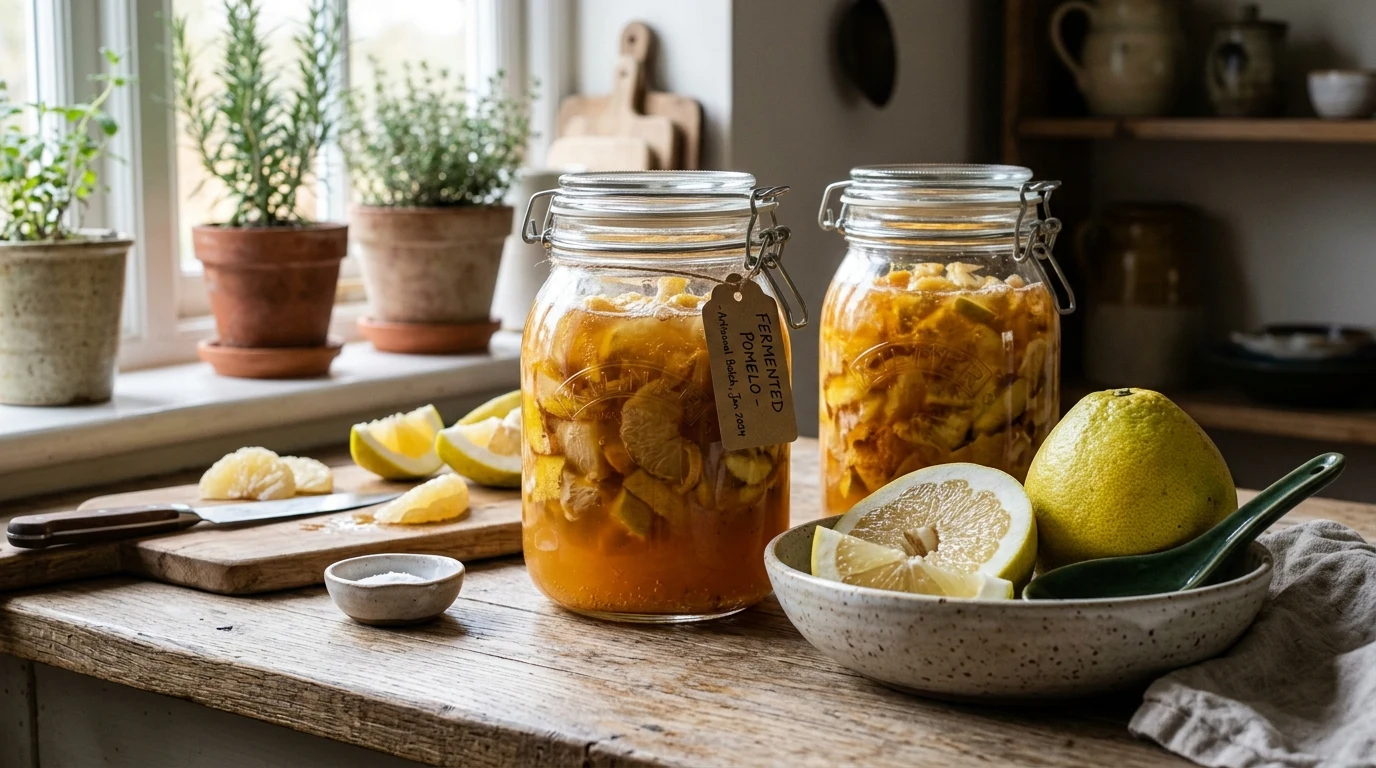
Fermented Pomelo: Traditional Recipes, Probiotic Benefits, and Fermentation Science
✨ This article was AI edited. Editorial responsibility: GarlicFruit.com.
Exploring the culinary and probiotic wonders of fermented pomelo (Citrus grandis) uncovers one of Southeast Asian and East Asian gastronomy’s most sophisticated preservation traditions. Through wild lacto-fermentation, enzymatic aging, and savory-sweet brine curing, the bitter flavedo, spongy albedo, and juicy juice vesicles of the pomelo are transformed into intensely complex, probiotic-rich condiments, digestive tonics, and artisan fermented delicacies.
Contents
The Microbiology and Biochemistry of Citrus Fermentation
Fermenting citrus fruits presents unique biochemical hurdles due to naturally high citric acid concentrations and antimicrobial monoterpenes (such as d-limonene) present in the peel. However, specialized wild yeasts and halotolerant lactic acid bacteria (LAB) thrive under calibrated salinity:
- Degradation of Bitter Flavonoids: Raw pomelo contains high concentrations of naringin and neohesperidin, the bioflavonoids responsible for its characteristic astringent bitterness. During microbial fermentation, bacterial alpha-L-rhamnosidase enzymes cleave the rhamnose sugar moiety from naringin, transforming it into the substantially less bitter compound prunin and tasteless naringenin.
- Lactic Acid Production: Species such as Lactobacillus plantarum and Leuconostoc mesenteroides ferment fruit sucrose and fructose into lactic acid, dropping the pH below 3.8 and establishing natural microbiological preservation.
- Pectin Breakdown and Texture Modification: Microbial pectinases gently soften the thick, spongy albedo (inner white pith), converting fibrous polysaccharides into spreadable, translucent gels without structural collapse.
| Fermentation Style | Primary Microorganisms | Fermentation Period | Salinity / Sugar Ratio | Culinary Application |
|---|---|---|---|---|
| Lacto-Fermented Pomelo Vesicles | L. plantarum, L. mesenteroides | 7 to 14 Days | 2.5% to 3.0% Salt Brine | Savory salads, grilled seafood relishes, ceviche |
| Candied Fermented Pomelo Rind (Cheong) | Wild Osmophilic Yeasts | 30 to 90 Days | 1:1 Sugar to Rind (by weight) | Cocktail syrups, hot citrus tea, pastry glazes |
| Savory Fish Sauce Cured Relish | Halophilic LAB & Natural Enzymes | 3 to 5 Days | High Salinity Fish Sauce base | Southeast Asian dipping condiments for meats |
Method 1: Master Lacto-Fermented Pomelo Segments
Lacto-fermenting peeled pomelo vesicles yields tangy, effervescent fruit pearls that pop with complex acidity and savory depth.
Ingredients & Equipment
- 1 large ripe pomelo (approx. 1 kg), peeled and carefully segmented (membranes completely removed)
- 1 liter non-chlorinated distilled water
- 30 grams unrefined non-iodized sea salt (3% brine concentration)
- Optional aromatics: 2 bird’s eye chilies (halved), 1 thumb fresh ginger (sliced), 2 kaffir lime leaves
- 1-liter glass fermentation jar with airlock lid and glass fermentation weight
Step-by-Step Protocol
- Vesicle Separation: Gently separate the individual juice vesicles (pearls) without bruising or bursting their delicate outer sacs.
- Brine Preparation: Dissolve 30g of sea salt into 1 liter of lukewarm distilled water until completely clear. Cool to room temperature (below 72°F / 22°C).
- Jar Packing: Place aromatics at the bottom of the sanitized jar, pack the pomelo pearls firmly above them, and pour the brine until all fruit is submerged under at least 1 inch of liquid.
- Submersion & Sealing: Place the glass fermentation weight atop the fruit to prevent any floating particles from contacting surface air. Seal with an airtight water airlock.
- Fermentation: Ferment at 65°F–72°F (18°C–22°C) in a dark cupboard for 7 to 10 days. When active bubbling subsides and the brine reaches a pleasantly tart, tangy aroma, transfer to the refrigerator.
Method 2: Fermented Pomelo Peel Candy & Digestive Cheong
The spongy white albedo of pomelo rind is exceptionally rich in soluble pectin and prebiotic fiber. Transforming it into an aged Korean-style cheong creates an incredible wellness syrup:
- Blanch thinly sliced pomelo peel in boiling water for 3 minutes, then drain and shock in ice water. Repeat twice to reduce excess bitter oils.
- Toss the drained peel with an equal weight of organic unrefined cane sugar (1:1 weight ratio).
- Layer into a sterilized glass jar, leaving 1 inch of headspace. Top with a protective 1/2-inch layer of dry sugar.
- Macerate and ferment at room temperature for 30 days, stirring weekly. The sugar extracts the cellular moisture, creating an intensely aromatic, golden probiotic syrup.
Advanced Enzymatic Clarification & Secondary Flavor Infusions
To further refine lacto-fermented pomelo condiments, contemporary fermentation chefs apply secondary botanical infusions during the final stage of aging:
| Infusion Element | Botanical Additive | Maceration Stage | Flavor & Functional Impact |
|---|---|---|---|
| Herbal Freshness | Wild Vietnamese mint & lemongrass stalks | Day 5 of lacto-fermentation | Sharp menthol citrus aromatics balancing brine salinity |
| Warm Pungency | Crushed whole black cardamom & star anise | Day 7 of sugar cheong aging | Deep balsamic camphor notes complementing sweet peel pectin |
| Chili Fire | Fermented habanero or bird’s eye chili mash | Initial brine blend | Capsaicin synergy accelerating metabolic thermogenesis |
| Floral Depth | Dried chamomile blossoms & kaffir leaves | Cold storage resting | Subtle honeyed floral notes softening citrus astringency |
Gut Microbiome and Immunological Benefits
Fermenting pomelo unlocks powerful functional health benefits:
- Probiotic Colonization: Delivers live, acid-resistant strains of Lactobacillus that survive gastric passage and populate the small intestine.
- Naringenin Bioavailability: De-glycosylated naringenin is absorbed over 400% more efficiently in the human gut than raw naringin, exerting potent anti-inflammatory effects and supporting healthy blood lipid regulation.
- Short-Chain Fatty Acid Promotion: Pectin-derived oligosaccharides act as specialized prebiotic fuel for butyrate-producing intestinal flora.
Frequently Asked Questions
Why does my fermented pomelo smell slightly sulfurous during early fermentation?
During the initial 48 to 72 hours, active wild yeasts and early-stage bacteria can release minor volatile sulfur compounds as they metabolize amino acids. This is completely normal and dissipates as homofermentative lactic acid bacteria dominate the culture by day 4.
How long can fermented pomelo be stored in the refrigerator?
Lacto-fermented pomelo segments kept submerged under their acidic brine retain optimal texture and probiotic vitality for 3 to 4 months at 38°F–40°F (3°C–4°C). Fermented sugar cheong syrups remain shelf-stable for up to 12 months.
Can I ferment grapefruit using the same recipe?
Yes. Grapefruit is a natural hybrid of pomelo and sweet orange. However, grapefruit contains significantly thinner peel and higher free acid, which slightly accelerates fermentation times (check after 5 days).
Is it safe to consume the white pith (albedo) of pomelo?
Yes. Pomelo albedo is entirely non-toxic and is celebrated in Asian cuisine for its high pectin content. Blanching and fermenting tenderizes the pith, removing bitterness and imparting a luscious, candied or savory texture.
Get our latest guides, news, and insights highlighted in your Google Search & AI Overviews.


