
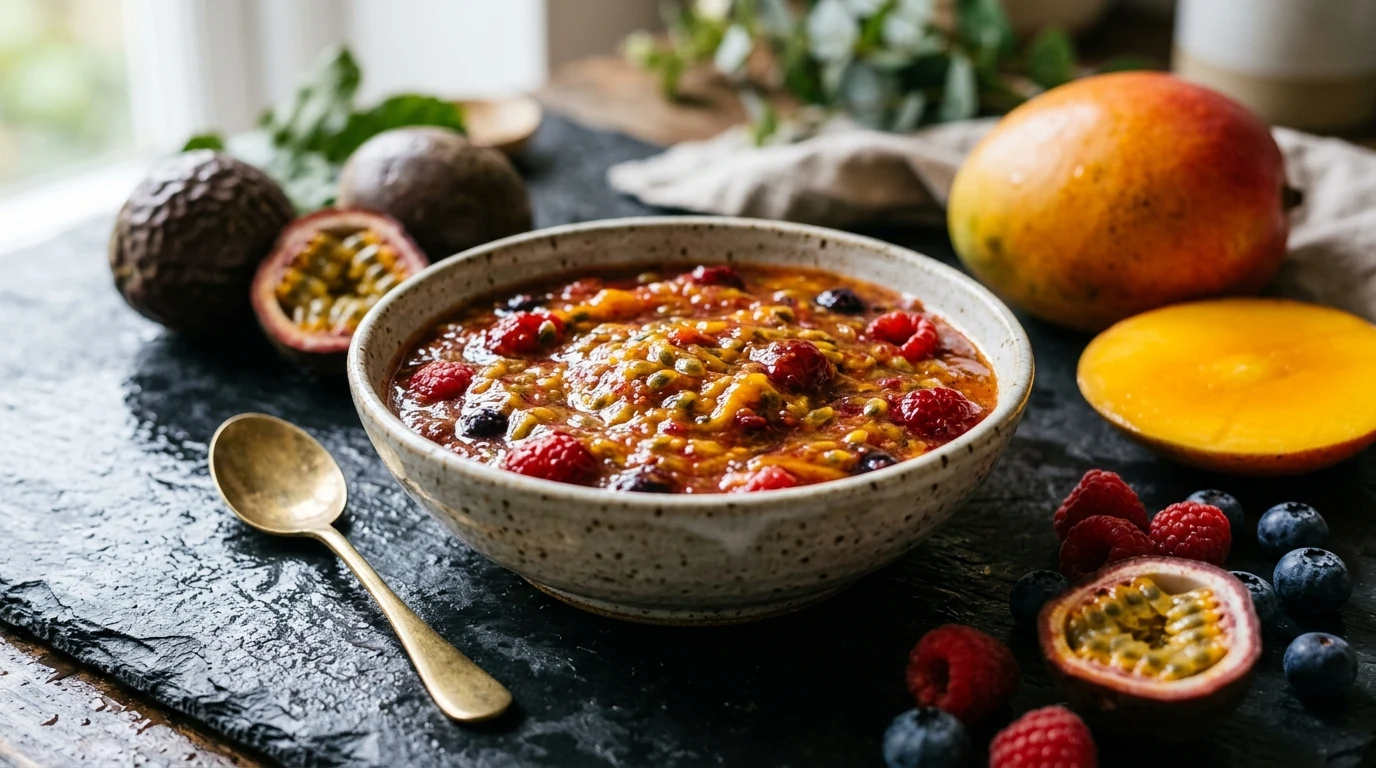
Primal Fruit Pulp: Nutrition, Processing Methods, and Culinary Applications
✨ This article was AI edited. Editorial responsibility: GarlicFruit.com.
In an era dominated by ultra-processed food isolates and stripped fruit juices, primal fruit pulp—the whole, unrefined fibrous matrix of sun-ripened whole fruits—has emerged as a foundational superfood in functional nutrition. By preserving the intact cellular architecture, natural prebiotic pectins, and bound micronutrients that industrial juicing discards, primal fruit pulp delivers optimal metabolic stability, digestive health, and unadulterated botanical flavor.
Contents
- What Is Primal Fruit Pulp? Whole Matrix vs. Clarified Juice
- The Metabolic Science: Why Cellular Fiber Architecture Matters
- Optimal Processing Methods: Preserving Bioactive Integrity
- Culinary and Functional Recipe Applications
- Microbiome Diversity Enhancement Protocols
- Industrial vs. Artisanal Extraction Quality Standards
- Frequently Asked Questions
What Is Primal Fruit Pulp? Whole Matrix vs. Clarified Juice
Commercial fruit processing routinely separates fruit into two components: liquid clarified juice (dominated by free fructose and glucose) and discarded pomace/pulp. Primal fruit pulp represents the complete, whole-fruit edible structure—including the pericarp, mesocarp, and cellular parenchymal tissue—processed gently to maintain microscopic structural integrity.
When fruit is consumed in its primal pulp matrix, the physical structure of intact plant cell walls dramatically alters digestive kinetics, slowing enzymatic carbohydrate breakdown and blunting postprandial glycemic spikes.
| Nutritional Metric | Primal Whole Fruit Pulp | Clarified / Strained Fruit Juice | Isolated Fruit Fiber Powder |
|---|---|---|---|
| Glycemic Index (GI) | Low to Moderate (25–45) | High (65–85) | N/A (Non-caloric additive) |
| Pectin & Soluble Fiber | Intact 3D gel-forming matrix | Completely removed (0 g) | Isolated chemical powder |
| Bound Polyphenols | Full spectrum (conjugated to fiber) | Partially degraded by clarification | Minimal to None |
| Gastric Emptying Rate | Slow, sustained release (2–3 hours) | Rapid (15–30 minutes) | Variable depending on carrier |
| Satiety Sensation | High (triggers GLP-1 & PYY release) | Very Low (no mastication or bulk) | Moderate |
The Metabolic Science: Why Cellular Fiber Architecture Matters
Nutritional biochemistry demonstrates that drinking clarified fruit juice causes rapid glucose absorption and hepatic fructose overload, stimulating de novo lipogenesis (fat accumulation). In contrast, primal fruit pulp provides key metabolic protections:
- Viscous Pectin Gel Barrier: Water-soluble pectin in raw fruit pulp hydrates in the stomach, forming a viscous mucosal layer across intestinal villi. This physical barrier slows digestive enzyme access to simple sugars.
- Colonic Fermentation to Short-Chain Fatty Acids (SCFAs): Insoluble cellulose and hemicellulose travel unabsorbed to the large intestine, where anaerobic gut microbiota ferment them into acetate, propionate, and butyrate—the primary fuel for colonocytes that strengthens gut barrier integrity.
- Antioxidant Protection: Up to 50% of a fruit’s total antioxidant capacity resides bound to cell-wall polysaccharides. These bound polyphenols survive stomach acid and release slowly in the colon, protecting against localized oxidative stress.
Optimal Processing Methods: Preserving Bioactive Integrity
Not all fruit pulp processing is created equal. High-speed blending generates frictional heat and cavitation that can shear delicate antioxidant bonds. Recommended extraction methods include:
- Slow Cold-Masticating Extraction: Low-RPM auger systems (40–80 RPM) gently crush fruit cells without generating thermal degradation, preserving heat-sensitive enzymes like bromelain, papain, and vitamin C.
- Stone Milling & Pureeing: Traditional granite stone mills grind whole dried or fresh fruits into luscious, velvety purees without introducing excessive oxygen.
- Flash Freezing (IQF): Individually quick-freezing fresh pulp at -40°F immediately after milling halts oxidative browning and locks in peak nutritional density for up to 12 months.
Culinary and Functional Recipe Applications
Primal fruit pulp is a versatile culinary ingredient that enhances texture, moisture, and natural sweetness across gourmet and everyday cooking:
- Gut-Healing Smoothie Base: Blend 1/2 cup of whole primal passion fruit, acai, or mango pulp with coconut kefir and chia seeds for a deeply satiating, prebiotic-rich breakfast bowl.
- Oil and Sugar Substitute in Baking: Replace up to 50% of butter or refined oil in artisan muffins and quick breads with equal weights of primal applesauce or prune pulp to create tender, naturally sweetened crumb structures.
- Raw Fermented Fruit Leathers: Dehydrate thin layers of primal berry pulp at 115°F (46°C) for 10 hours to create shelf-stable, enzyme-rich fruit snacks for hiking and travel.
- Artisan Glazes and Coulis: Gently warm primal raspberry or blackberry pulp with a squeeze of fresh lemon juice and a touch of raw honey to glaze roasted duck breast or artisan goat cheese.
Microbiome Diversity Enhancement Protocols
Integrating diverse botanical fruit matrices into daily dietary habits stimulates distinct microbial phylogenetic clades:
- Polyphenol-Enriched Berries: Dark berry pulps rich in anthocyanins and ellagitannins selectively nourish Akkermansia muciniphila, an essential mucin-degrading bacterium associated with lean metabolic phenotypes and reduced intestinal permeability.
- Tropical Stone Fruits: Pulps from mangoes and papayas deliver soluble galactooligosaccharides that fuel beneficial Faecalibacterium prausnitzii populations, promoting anti-inflammatory mucosal cytokine balance.
- Pome Fruit Pectins: Apples and pears provide high-molecular-weight rhamnogalacturonan pectins that optimize distal colonic transit times and stool hydration.
Industrial vs. Artisanal Extraction Quality Standards
| Quality Parameter | Artisanal Primal Mastication | High-Speed Centrifugal Juicing | Thermal Flash Concentration |
|---|---|---|---|
| Processing Temperature | Ambient (<75°F / 24°C) | Frictional Rise (95°F–115°F) | Pasteurized (185°F–220°F) |
| Enzymatic Retention | 95%–100% native activity | 30%–50% degradation | Completely denatured (0%) |
| Cell Wall Matrix Integrity | Microscopically intact fibrils | Sheared / ruptured fragments | Hydrolyzed soluble sugars |
| Oxidative Dissolved Oxygen | Minimal (<1.5 ppm) | High (>8.0 ppm aeration) | Deaerated via vacuum boil |
Frequently Asked Questions
What is the difference between fruit puree and primal fruit pulp?
Standard commercial purees are frequently pasteurized at ultra-high temperatures and micro-filtered to remove seeds, skins, and coarser fibers for uniform viscosity. Primal fruit pulp retains the entire natural fiber matrix, micro-seeds, and native pectin without aggressive filtration.
Can diabetics consume primal fruit pulp safely?
While individuals with insulin resistance or diabetes should monitor their total carbohydrate intake, consuming whole fruit pulp with intact fiber produces significantly lower blood glucose spikes than drinking fruit juice. Pairing pulp with protein or healthy fats further moderates the glycemic curve.
How should primal fruit pulp be stored for maximum freshness?
Freshly extracted unpasteurized fruit pulp should be kept in airtight glass containers in the refrigerator and consumed within 3 to 5 days. For long-term storage, portion into silicone freezer moulds and store at 0°F (-18°C) for up to 12 months.
Does blending destroy the fiber in fruit pulp?
No. While mechanical blending breaks down the macroscopic size of plant cells, it does not destroy or chemically alter dietary fiber polymers (cellulose, hemicellulose, and pectin). The fiber continues to provide viscous bulking and prebiotic benefits in the digestive tract.
Get our latest guides, news, and insights highlighted in your Google Search & AI Overviews.


