
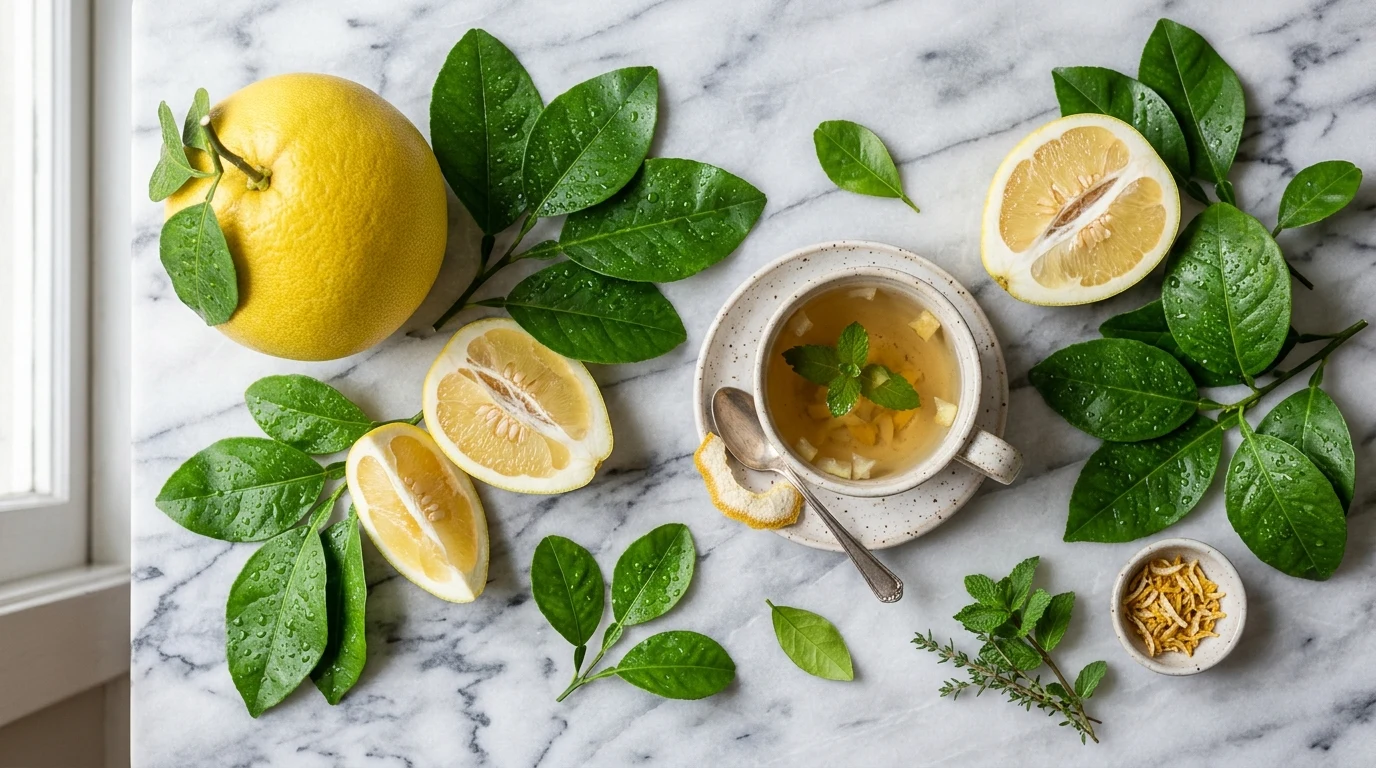
Pomelo Leaves: Botanical Properties, Traditional Uses, and Culinary Benefits
✨ This article was AI edited. Editorial responsibility: GarlicFruit.com.
Across Southeast Asia and traditional citrus-growing regions, pomelo leaves (the foliage of Citrus grandis, syn. Citrus maxima) hold an esteemed place in botanical medicine, ceremonial heritage, and culinary gastronomy. While the gargantuan pomelo fruit garners worldwide culinary praise, its lush evergreen leaves contain an extraordinary concentration of therapeutic volatile essential oils, antioxidant bioflavonoids, and sacred cultural significance.
Contents
- Botanical Profile and Morphology of Citrus grandis Foliage
- Cultural Heritage and Ceremonial Cleansing Rituals
- Therapeutic and Aromatherapeutic Applications
- Culinary Uses: Infusions and Aromatic Steaming Wrappers
- Harvesting, Curing, and Home Preservation of Citrus Leaves
- Cultivar Variations and Regional Citrus Maxima Hybrids
- Frequently Asked Questions
Botanical Profile and Morphology of Citrus grandis Foliage
The pomelo tree is the ancestral progenitor of modern citrus cultivars, including the grapefruit and sweet orange. Its leaves possess distinctive morphological characteristics that differentiate them from other citrus species:
- Broad Winged Petioles: Pomelo leaves feature prominently obovate, broadly winged leaf stems (petioles) that resemble miniature leaf blades attached beneath the main elliptical foliage.
- Glandular Punctations: The underside of the leaf blade is densely studded with pellucid sub-epidermal oil glands that release a sharp, uplifting floral-citrus aroma when crushed.
- Coriaceous Texture: The leaves are thick, leathery, and dark glossy green above with a lighter, duller undersurface, measuring between 4 to 8 inches (10–20 cm) in length.
| Phytochemical Class | Primary Active Compounds | Biological Mechanism & Benefit |
|---|---|---|
| Monoterpenes (Essential Oils) | d-Limonene (55%–70%), Myrcene, alpha-Pinene | Broad-spectrum antimicrobial, insecticidal, atmospheric purification |
| Oxygenated Terpenoids | Linalool, Citronellal, Nerolidol, Geraniol | Anxiolytic, central nervous system calming, sedative aromatherapy |
| Citrus Bioflavonoids | Naringin, Hesperidin, Rutin, Neohesperidin | Capillary strengthening, radical oxygen species scavenging, anti-inflammatory |
| Coumarins & Furanocoumarins | Auraptene, Bergapten (trace amounts) | Topical photoprotection and natural botanical antifungal defense |
Cultural Heritage and Ceremonial Cleansing Rituals
In Cantonese and wider East Asian folklore, pomelo leaves (known as luk sau yip in Cantonese) are celebrated as powerful botanical agents of spiritual purification and good fortune:
- Lunar New Year Purification Baths: On the eve of Chinese New Year, families boil fresh pomelo leaves in large cauldrons of water. Bathing with the aromatic warm infusion is believed to wash away negative energy, misfortune, and lingering illness from the prior year, welcoming prosperity for the new spring cycle.
- Post-Funeral Cleansing: Mourners traditionally wash their hands and face with pomelo leaf water before entering their homes after attending memorial services or visiting cemeteries to cleanse spiritual attachments.
- Consecration of Spaces: Steaming bundles of fresh pomelo foliage are used to sweep and bless new homes and storefronts before grand openings.
Therapeutic and Aromatherapeutic Applications
Modern pharmacological studies corroborate many traditional ethnobotanical applications of pomelo foliage extracts:
- Stress Reduction and Mood Elevation: Inhaling the volatile vapor of diffused pomelo leaf essential oil significantly reduces salivary cortisol levels and enhances parasympathetic nervous system activity due to synergistic limonene and linalool content.
- Natural Botanical Hair & Scalp Rinses: Boiling pomelo leaves with ginger root and soapberries (Sapindus mukorossi) creates an ancient, zero-chemical herbal hair rinse that cleanses sebum, strengthens hair follicles, and imparts a natural shine.
- Antimicrobial Skin Wash: Dilute decoctions of dried pomelo leaves exhibit inhibitory activity against common dermal pathogens, including Staphylococcus aureus and Cutibacterium acnes.
Culinary Uses: Infusions and Aromatic Steaming Wrappers
While too fibrous and tough to consume raw, pomelo leaves are utilized extensively in Southeast Asian culinary traditions as aromatic seasoning and cooking vessels:
- Aromatic Herbal Tea: Sun-dried pomelo leaves steeped in boiling water for 5 to 7 minutes produce a delicate, refreshing herbal tea with subtle citrus notes and mild astringency.
- Steaming Wrappers: In rural Vietnamese and Thai cooking, poultry, fish fillets, and glutinous rice bundles are wrapped in fresh pomelo leaves prior to steaming, infusing proteins with fragrant citrus terpenes while locking in moisture.
- Herbal Broths: Adding 2–3 bruised whole leaves into simmering herbal chicken broths imparts a clean citrus brightness that balances rich animal fats.
Harvesting, Curing, and Home Preservation of Citrus Leaves
To preserve fresh pomelo leaves for year-round botanical and culinary use, follow these professional harvesting standards:
- Harvest Timing: Harvest mature, fully expanded leaves during dry mid-morning hours after morning dew has evaporated but before peak afternoon solar heat. Mid-branch foliage provides the highest essential oil density compared to newly emerged tips.
- Shade Drying Protocol: Spread clean leaves in a single layer on food-grade dehydrator screens in a warm (85°F–95°F / 30°C–35°C), dark, well-ventilated room. Avoid direct sunlight to prevent UV photodegradation of delicate linalool and monoterpenes.
- Airtight Storage: Once brittle and dry (approximately 4 to 6 days), store whole dried leaves in airtight glass jars away from heat sources. Dried leaves retain therapeutic aroma for up to 18 months.
Cultivar Variations and Regional Citrus Maxima Hybrids
Different pomelo sub-varieties exhibit distinct essential oil profiles in their foliar tissues:
| Pomelo Cultivar | Primary Geographic Origin | Foliar Aroma Profile | Distinct Botanical Trait |
|---|---|---|---|
| Thong Dee (Honey Pomelo) | Central Thailand (Nakhon Pathom) | Sweet floral citrus with prominent linalool notes | Large winged petioles, high cold tolerance |
| Kao Pan (White Pomelo) | Southeast Asia | Crisp, tart lime-like fragrance (d-limonene dominant) | Deep dark glossy foliage, heavy oil gland density |
| Guanxi Honey Pomelo | Fujian Province, China (Pinghe County) | Delicate honey-citrus with subtle herbal undertones | Elongated obovate leaves, heavy blossom aroma |
| Chandler Pink Pomelo | Indio, California (Hybrid) | Pungent grapefruit-citrus bouquet | Thick coriaceous blades with prominent veins |
Frequently Asked Questions
How do you prepare a traditional pomelo leaf cleansing bath?
Bring 3 to 4 liters of water to a rolling boil. Add 15 to 20 fresh or dried pomelo leaves (lightly bruised by hand) and simmer for 15 minutes until the water turns golden and intensely fragrant. Pour the strained warm herbal water into your bathwater or use as a final post-shower rinse.
Can pomelo leaves be used as a natural insect repellent?
Yes. Crushing fresh pomelo leaves releases high concentrations of d-limonene and pinene, natural volatile terpenes that deter mosquitoes, gnats, and garden aphids without synthetic chemicals.
Where can I source fresh pomelo leaves?
Fresh pomelo leaves are available at traditional Asian grocery markets, particularly in the days leading up to Lunar New Year celebrations. Specialty citrus nurseries also sell potted Citrus grandis trees suitable for home patio and greenhouse cultivation.
Are pomelo leaves safe for pets?
Like all citrus foliage, pomelo leaves contain concentrated essential oils and psoralens that can cause gastrointestinal upset or mild toxicity in domestic cats and dogs if ingested in large quantities. Keep fresh leaves out of reach of curious pets.
Get our latest guides, news, and insights highlighted in your Google Search & AI Overviews.


