
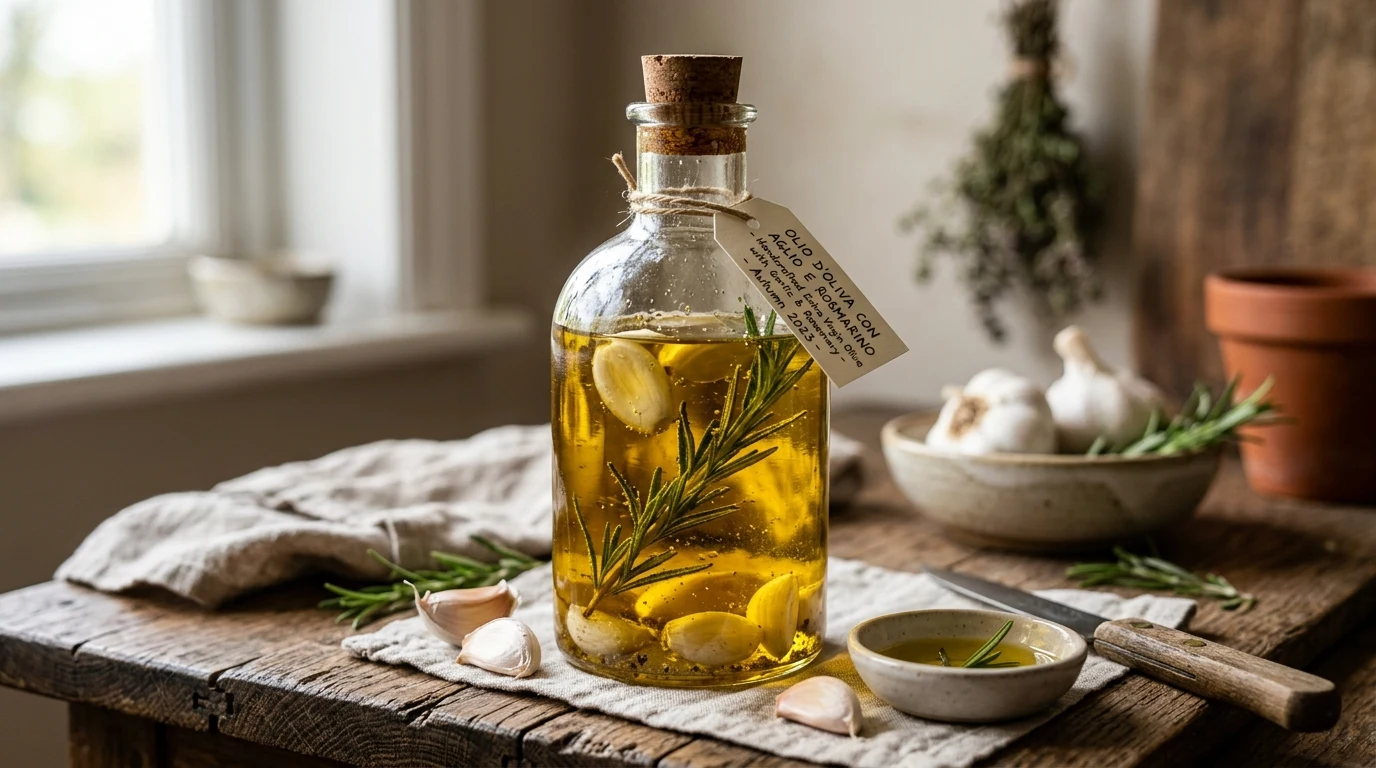
Storing Garlic in Olive Oil: Safe Practices, Botulism Risks, and Preservation Methods
✨ This article was AI edited. Editorial responsibility: GarlicFruit.com.
Storing fresh garlic in olive oil is one of the culinary world’s most convenient flavor infusions, yet it presents one of home food preservation’s most critical microbiological safety considerations. Because raw garlic is a low-acid soil-grown allium, submerging it in an oxygen-deprived lipid environment creates the precise conditions required for Clostridium botulinum spore germination and lethal neurotoxin production unless strict scientific protocols are followed.
Contents
- The Microbiology of Botulism in Garlic-Infused Oil
- USDA and FDA Safety Guidelines for Homemade Garlic Oil
- Method 1: Acidification Protocol for Extended Refrigerated Storage
- Method 2: Freezing Garlic Puree Cubes (Long-Term Preservation)
- Method 3: Slow-Simmered Garlic Confit in Olive Oil
- Essential Equipment Checklist for Home Allium Preservation
- Troubleshooting Common Garlic-in-Oil Preservation Issues
- Frequently Asked Questions
The Microbiology of Botulism in Garlic-Infused Oil
Clostridium botulinum is an anaerobic, spore-forming bacterium naturally prevalent in agricultural soils worldwide. While the spores are harmless when ingested by healthy adults in oxygenated environments, they germinate and produce deadly botulinum neurotoxins under specific ambient conditions:
- Anaerobic Environment: Submerging garlic under an airtight blanket of olive oil eliminates all atmospheric oxygen.
- Low Acidity (High pH): Fresh garlic has a natural pH ranging between 5.3 and 6.3—well above the critical safety threshold of pH 4.6 required to inhibit botulinum spore outgrowth.
- Moisture Content: Fresh garlic cloves contain approximately 65% water, providing the exact water activity (\(a_w > 0.93\)) necessary for microbial metabolism.
- Favorable Temperature: Spores thrive and produce toxin rapidly at room temperature (68°F–77°F / 20°C–25°C) and can produce toxin down to 38°F (3.3°C) over extended storage durations.
| Storage / Preparation Method | Maximum Safe Duration | Temperature Requirement | Safety Mechanism |
|---|---|---|---|
| Raw Unacidified Garlic in Oil | Maximum 4 Days | Refrigerated at or below 40°F (4°C) | Cold slows bacterial replication (mandatory disposal after day 4) |
| Acidified Garlic in Oil (Commercial Standard) | Up to 3 Weeks (Refrigerated) | 40°F (4°C) | Acidification below pH 4.2 prevents spore germination |
| Frozen Garlic-in-Oil Puree | 6 to 12 Months | 0°F (-18°C) or colder | Complete freezing halts all microbial activity |
| Properly Heated Garlic Confit | Up to 2 Weeks (Refrigerated) | 40°F (4°C) | Thermal kill of vegetative cells; continuous refrigeration halts spore growth |
USDA and FDA Safety Guidelines for Homemade Garlic Oil
The United States Department of Agriculture (USDA) and the Food and Drug Administration (FDA) enforce unambiguous safety standards for homemade allium infusions:
- Immediate Consumption or Disposal: Unacidified homemade mixtures of raw garlic submerged in olive oil must be refrigerated immediately and consumed within 4 days. Any leftover mixture must be discarded after 96 hours.
- Never Store at Room Temperature: Never leave raw garlic-in-oil mixtures on kitchen counters, pantries, or dining tables. Even commercial restaurants must refrigerate freshly prepared herb-and-garlic dipping oils.
- Toxin Heat Sensitivity: While botulinum spores withstand boiling water temperatures (212°F / 100°C) for hours, the actual botulinum neurotoxin protein is heat-labile and is denatured by boiling food vigorously for at least 10 minutes at 185°F (85°C) or higher. However, boiling should never be relied upon as a substitute for proper cold chain storage.
Method 1: Acidification Protocol for Extended Refrigerated Storage
To safely extend the refrigerated shelf life of homemade garlic in olive oil up to 3 weeks, commercial food scientists utilize a food-grade citric acid or vinegar soak:
Step-by-Step Acidification
- Prepare an acidifying solution of 3% food-grade citric acid in distilled water (or 1 part 5% acidity white distilled vinegar to 1 part water).
- Submerge peeled, coarsely chopped garlic cloves completely in the acid solution for 24 hours at room temperature.
- Drain the acidified garlic thoroughly. The internal pH of the cloves will drop below 4.2.
- Submerge the acidified garlic in extra virgin olive oil in a sanitized glass jar, seal tightly, and store in the refrigerator for up to 21 days.
Method 2: Freezing Garlic Puree Cubes (Long-Term Preservation)
Freezing is the absolute safest and most convenient long-term method for preserving garlic in olive oil without any chemical acidification:
- Pureeing: Combine 2 parts peeled fresh garlic cloves with 1 part premium extra virgin olive oil in a food processor. Puree until a smooth paste forms.
- Portioning: Spoon the garlic paste into silicone ice cube trays or individual freezer-safe mini moulds.
- Freezing: Freeze at 0°F (-18°C) until solid. Once frozen, pop the individual garlic oil cubes into an airtight freezer bag.
- Culinary Use: Drop frozen cubes directly into hot sauté pans, pasta sauces, soups, or stir-fries—no thawing required. The oil keeps the garlic from freezing rock-hard, allowing easy scooping.
Method 3: Slow-Simmered Garlic Confit in Olive Oil
Garlic confit transforms pungent, firm cloves into buttery, sweet, caramelized spreads through gentle thermal extraction:
- Place 2 cups of peeled garlic cloves and fresh herbs (thyme, rosemary) in a heavy oven-safe dish. Pour olive oil until cloves are submerged by 1/2 inch.
- Bake at 200°F (95°C) for 2 to 2.5 hours until cloves are golden and completely tender when pressed with a fork.
- Cool rapidly in an ice bath. Transfer into sterilized glass jars and store immediately in the refrigerator. Consume within 14 days.
Essential Equipment Checklist for Home Allium Preservation
| Tool / Equipment | Recommended Material | Primary Food Safety Function |
|---|---|---|
| Storage Jars | Lead-free borosilicate or flint glass with airtight silicone gaskets | Non-reactive non-porous lipid barrier preventing rancidity |
| Digital pH Tester | Calibrated glass-electrode food pH meter | Deterministic verification that clove internal pH is below 4.2 |
| Infusion Funnel & Strainer | Food-grade 304 stainless steel mesh | Eliminates raw particle debris when bottling infused finishing oils |
| Freezer Portion Trays | BPA-free platinum silicone with individual clip-on lids | Ensures rapid heat transfer and airtight freezer burn prevention |
Troubleshooting Common Garlic-in-Oil Preservation Issues
Understanding physical and chemical changes in stored garlic oil prevents unnecessary food waste while maintaining strict safety:
- Cloudy or Solidified Oil: When stored below 40°F (4°C), the high monounsaturated oleic fatty acid content in extra virgin olive oil naturally crystallizes into a solid, cloudy butter-like consistency. This is a purely physical phase change, completely harmless, and fully reversible upon standing at room temperature for 10 minutes.
- Blue or Green Clove Discoloration: When garlic is exposed to mild dietary acids (such as during acidification or pickling), naturally occurring sulfur compounds react with trace amino acids and copper ions in the presence of alliinase to form pyrrole pigment complexes. This vibrant turquoise or emerald color is non-toxic and entirely safe to eat.
- Bubbling or Gas Pressure: If you observe any active effervescence, fizzy carbonation, or hissing gas release when opening a refrigerated jar of garlic in oil, this indicates active microbial fermentation. Discard the contents immediately into sealed outdoor trash without tasting.
Frequently Asked Questions
Can I store cooked garlic confit at room temperature?
No. While cooking kills vegetative bacteria, botulinum bacterial spores can survive cooking temperatures below 250°F (121°C). If cooked garlic confit is left at room temperature, surviving spores can germinate in the anaerobic oil. Always refrigerate confit immediately after cooling.
Can you tell if garlic in oil has botulism by smell or appearance?
No. Clostridium botulinum bacteria and its toxins do not produce off-putting odors, cloudiness, unusual discoloration, or off-flavors. Food contaminated with lethal levels of botulinum toxin can look, smell, and taste completely normal.
Does raw garlic naturally have antibacterial properties against botulism?
While allicin in freshly crushed garlic exhibits strong antibacterial efficacy against many common pathogens (such as E. coli and Staphylococcus), it does not reliably inhibit the growth or spore germination of Clostridium botulinum in anaerobic oil environments.
What type of olive oil is best for garlic infusions?
Extra virgin olive oil (EVOO) provides superior polyphenol antioxidants and robust flavor. However, EVOO solidifies and turns cloudy when refrigerated below 40°F (4°C). This cloudiness is natural crystallization and does not indicate spoilage; the oil liquifies rapidly at room temperature.
Get our latest guides, news, and insights highlighted in your Google Search & AI Overviews.


