
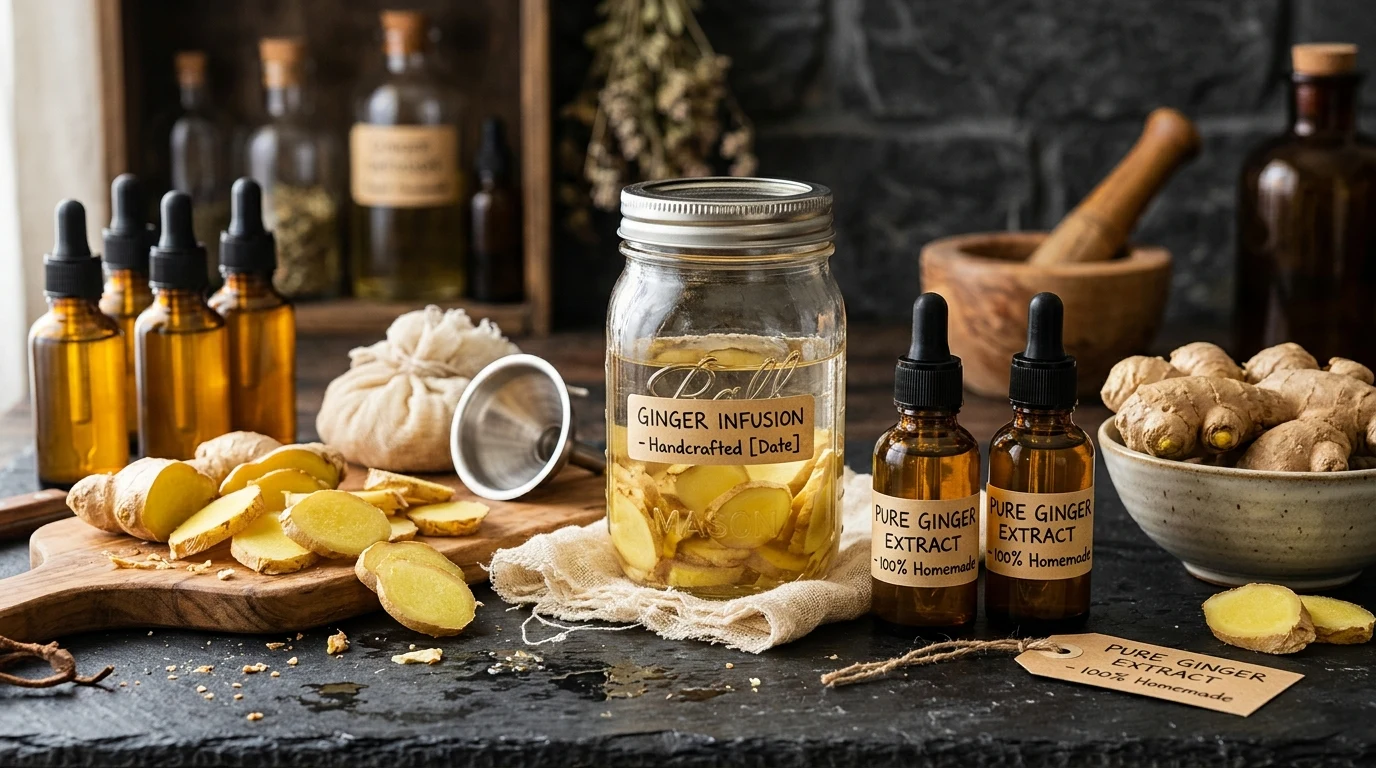
How to Make Ginger Extract at Home: Step-by-Step Culinary & Medicinal Guide
✨ This article was AI edited. Editorial responsibility: GarlicFruit.com.
Learning how to make ginger extract at home empowers home cooks, mixologists, and herbalists to capture the concentrated essence of fresh ginger root (Zingiber officinale). Whether preparing a high-potency alcohol tincture for medicinal wellness, a smooth vegetable glycerin extract for alcohol-free recipes, or a culinary extract for baking, homemade preparations deliver superior flavor and active bioactive gingerols compared to store-bought alternatives.
Contents
- The Biochemical Advantage of Homemade Ginger Extraction
- Method 1: High-Potency Alcohol-Based Ginger Extract (Master Recipe)
- Method 2: Alcohol-Free Vegetable Glycerin Ginger Extract (Glycerite)
- Method 3: Rapid Culinary Ginger Extract Concentrate
- Maximizing Gingerol Extraction Yield & Quality Control
- Culinary and Therapeutic Dosing Guidelines
- Frequently Asked Questions
The Biochemical Advantage of Homemade Ginger Extraction
Fresh ginger rhizome contains complex aromatic and bioactive compounds responsible for its pungency, thermal warming sensation, and therapeutic properties:
- [6]-Gingerol: The primary pungent compound in fresh rhizomes, exhibiting anti-inflammatory, antiemetic, and antioxidant activity.
- [6]-Shogaol: Formed when gingerol is dehydrated through gentle heating or aging. Shogaol is roughly twice as pungent as gingerol and demonstrates potent neuroprotective and metabolic properties.
- Zingiberene: The principal sesquiterpene volatile oil providing fresh ginger’s signature citrusy aroma.
- Paradols & Zingerone: Secondary gingerol transformation products with pronounced anti-inflammatory and thermogenic properties.
| Extraction Method | Primary Solvent | Extraction Time | Shelf Life | Best Application |
|---|---|---|---|---|
| Alcohol Tincture (Maceration) | 80–100 proof vodka or grain alcohol | 4 to 6 weeks | 3 to 5 years | Herbal wellness, cocktails, long-term pantry |
| Glycerin Extract (Glycerite) | Food-grade vegetable glycerin + distilled water | 4 to 6 weeks | 1 to 2 years | Alcohol-free baking, pediatric wellness, beverages |
| Hot Water Decoction Concentrate | Distilled water (simmered) | 45 to 60 minutes | 2 to 3 weeks (chilled) | Syrups, ginger ales, marinades |
| Infused Culinary Oil | Organic olive, sesame, or avocado oil | 2 hours (low heat) | 3 to 6 months | Dressings, sautéing, culinary finishing |
Method 1: High-Potency Alcohol-Based Ginger Extract (Master Recipe)
Alcohol extraction remains the gold standard for full-spectrum bioactive solubility, extracting both polar water-soluble and non-polar lipid-soluble ginger phytocompounds.
Equipment and Ingredients
- 8 oz (225g) fresh organic ginger root (firm, unwrinkled skin)
- 12 fl oz (350ml) high-proof neutral spirit (80–100 proof vodka or food-grade 190 proof cane alcohol diluted 1:1 with distilled water)
- 16 oz wide-mouth glass mason jar with airtight lid
- Unbleached cheesecloth or ultra-fine mesh nut milk bag
- Amber glass dropper bottles for UV-shielded storage
Step-by-Step Protocol
- Washing & Prepping: Scrub ginger thoroughly under cold water. If organic, leave the skin intact as it contains high concentrations of polyphenols. Finely grate or chop the rhizome into 1/8-inch slices to maximize surface area contact with the solvent.
- Maceration: Transfer the prepared ginger into the sterilized mason jar. Pour the alcohol over the ginger until the rhizomes are completely submerged with at least 1 inch of liquid headspace above the solids.
- Agitation & Infusion: Seal tightly and store in a cool, dark cupboard (60°F–70°F). Shake the jar vigorously for 30 seconds once daily for the first two weeks, then 2–3 times per week for the remaining 4 weeks.
- Pressing & Filtering: After 4 to 6 weeks, strain the liquid through unbleached cheesecloth, pressing firmly on the ginger pulp to extract every drop of concentrated liquid.
- Bottling: Transfer the finished extract into amber glass dropper bottles. Label with the preparation date and alcohol percentage.
Method 2: Alcohol-Free Vegetable Glycerin Ginger Extract (Glycerite)
For children, pregnant individuals managing morning sickness, or those avoiding alcohol, vegetable glycerin creates a sweet, syrupy extract with gentle bioavailability.
- Combine 3 parts USP food-grade organic vegetable glycerin with 1 part distilled water (75% glycerin ratio prevents microbial growth).
- Combine with grated fresh ginger in a glass jar.
- Macerate for 6 weeks in a dark cabinet, shaking daily.
- Strain and store in amber glass. Shelf life is approximately 18 months at room temperature.
Method 3: Rapid Culinary Ginger Extract Concentrate
When you need immediate ginger essence for baking or cocktail crafting without waiting weeks for maceration:
- Combine 1 cup of peeled, finely chopped fresh ginger with 1 cup of water and 1/2 cup of organic cane sugar in a small saucepan.
- Bring to a gentle simmer over medium-low heat for 30 minutes until reduced by half.
- Press solids through a fine-mesh sieve. Bottle the rich concentrate and refrigerate for up to 3 weeks.
Maximizing Gingerol Extraction Yield & Quality Control
To ensure laboratory-grade purity and peak organoleptic intensity in your homemade extract batches, adhere to these quality control parameters:
- Surface Area to Volume Optimization: Finely shredding ginger root using a ceramic microplane increases surface contact area by over 400% compared to thick rounds, accelerating extraction efficiency from 6 weeks to 3 weeks.
- Menstruum Ratio Standards: In professional herbal pharmacopeias, a 1:2 fresh herb-to-solvent ratio (1 part weight fresh ginger to 2 parts volume alcohol) delivers standard clinical potency. For dried ginger root, a 1:5 ratio is standard.
- Light Degradation Prevention: Gingerols and volatile essential oils degrade rapidly when exposed to ultraviolet radiation. Always store finished extracts in dark amber or cobalt blue glass bottles rather than clear flint glass.
Culinary and Therapeutic Dosing Guidelines
Because homemade ginger extract is highly concentrated, use measured droppers when flavoring recipes or preparing wellness tonics:
- Baking & Pastry: Use 1/2 to 1 teaspoon of alcohol-based ginger extract in gingerbread, cookies, and fruit pies in place of ground dried ginger for fresher, brighter spice notes.
- Craft Cocktails & Mocktails: Add 2–3 dashes (approx. 15–20 drops) to Moscow Mules, Old Fashioneds, or sparkling mineral water with fresh lime.
- Digestive Wellness: Dilute 15 to 30 drops (approx. 1 ml) in 4 oz of warm water after heavy meals to support gastric motility and alleviate bloating.
Frequently Asked Questions
Should I peel ginger before making extract?
If using organic ginger, peeling is not required—the skin contains concentrated aromatic terpenes. Simply scrub away all soil. If using conventionally grown ginger with potential pesticide or wax residue, peel the skin using the edge of a spoon before chopping.
Can I use dried ginger instead of fresh ginger root?
Yes. Dried ginger root yields an extract richer in pungent [6]-shogaols rather than fresh [6]-gingerols. When using dried cut-and-sifted ginger, reduce the weight by half (use 4 oz dried ginger per 12 oz alcohol) because dried root absorbs significant volume during rehydration.
How do I know if my homemade ginger extract has spoiled?
High-proof alcohol extracts (40%+ ABV) are self-preserving and do not spoil or harbor bacteria. However, if using water-based decoctions or low-glycerin mixtures, discard immediately if you observe cloudiness, off-odors, surface mold, or carbonation pressure.
What is the shelf life of homemade ginger extract?
Alcohol-based tinctures stored in dark amber glass bottles away from direct sunlight maintain peak potency for 3 to 5 years. Glycerites remain stable for 1 to 2 years, while refrigerated water-based decoctions should be consumed within 3 weeks.
Get our latest guides, news, and insights highlighted in your Google Search & AI Overviews.


