
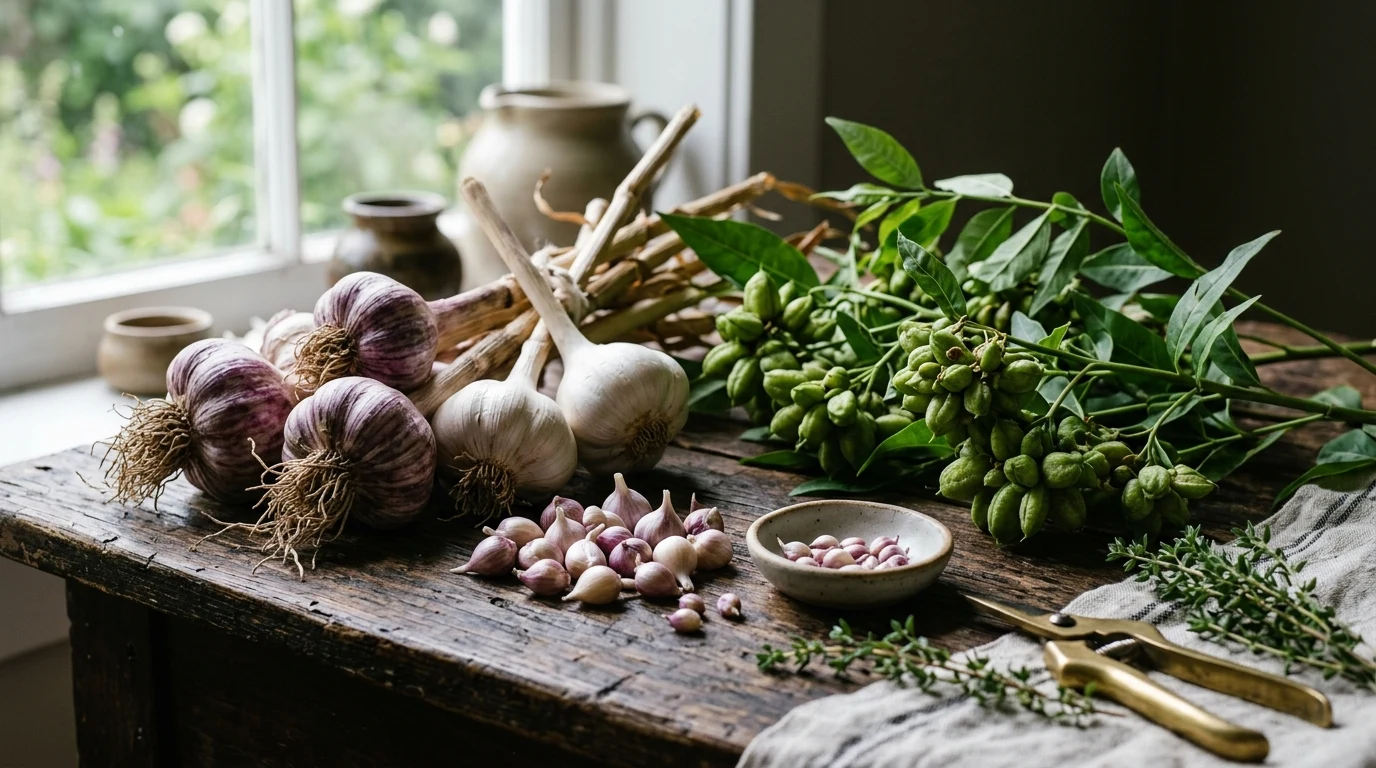
Garlic Fruit: Botanical Facts, Culinary Uses, and Nutritional Secrets
✨ This article was AI edited. Editorial responsibility: GarlicFruit.com.
Is garlic a fruit, vegetable, or herb? While everyday culinary terminology groups garlic with savory root vegetables, botanical classification defines plant organs through strict reproductive and anatomical criteria. Exploring the true nature of garlic fruit reveals fascinating botanical distinctions, ranging from the true seeds formed by flowering alliums to the tropical tree species commonly nicknamed “garlic fruit.”
Contents
- Botanical Classification: Is Garlic Technically a Fruit?
- Do Garlic Plants Ever Produce Fruit or True Seeds?
- The “Garlic Fruit” Tree: Tropical Species with Pungent Aromas
- Biochemical Profile: Why Garlic Mimics Healing Superfoods
- Culinary Applications of Garlic Scapes and Aerial Bulbils
- Comprehensive Nutritional Profile Comparison
- Frequently Asked Questions
Botanical Classification: Is Garlic Technically a Fruit?
In botanical science, a fruit is strictly defined as the mature, ripened ovary of a flowering angiosperm plant that encloses one or more botanical seeds. Common examples of culinary vegetables that are botanically fruits include tomatoes, bell peppers, avocados, eggplants, and cucumbers, because they develop from fertilized floral blossoms and serve the biological function of sexual seed dispersal.
Garlic (Allium sativum) is not a botanical fruit. Anatomically, garlic is categorized as a modified underground storage bulb composed of multiple fleshy segments known as cloves. Each individual clove is a specialized, thickened storage scale (modified leaf base) attached to a compressed basal stem plate. Its evolutionary purpose is asexual vegetative reproduction and carbohydrate preservation rather than sexual seed generation.
| Botanical Criterion | True Botanical Fruit (Angiosperm) | Garlic Storage Bulb (Allium sativum) |
|---|---|---|
| Plant Organ Origin | Ripened flower ovary (angiosperm reproductive organ) | Underground stem axis with swollen storage leaves (bulb) |
| Reproductive Mechanism | Botanical seeds formed via sexual pollination | Vegetative cloves (clonal asexual propagation) |
| Primary Carbohydrate Form | Simple monosaccharides (fructose, glucose, sucrose) | Complex fructan polysaccharides (inulin-type oligomers) |
| Active Phytochemical Class | Organic acids, carotenoids, flavonoids | Organosulfur alliinase-derived thiosulfinates (allicin) |
| Taxonomic Family | Solanaceae, Cucurbitaceae, Rosaceae, Rutaceae | Amaryllidaceae (Subfamily Allioideae, Genus Allium) |
Do Garlic Plants Ever Produce Fruit or True Seeds?
While standard commercial agriculture relies entirely on planting vegetative cloves, hardneck garlic varieties (Allium sativum var. ophioscorodon) produce tall, elegant curling flowering stems called scapes during late spring and early summer. At the terminal end of each scape, an inflorescence known as an umbel develops inside a protective sheath called a spathe.
- Aerial Bulbils (Topsets): Under normal growth conditions, the umbel produces dozens of tiny, miniature garlic cloves known as bulbils. These are vegetative clones rather than true botanical fruits or seeds.
- True Botanical Garlic Seed Capsules: When agricultural researchers deliberately remove developing bulbils from the umbel, the actual flowers can undergo successful insect pollination. The resulting fertilized blossoms produce genuine botanical fruit capsules—three-valved locules containing small, angular black seeds capable of sexual genetic recombination.
The “Garlic Fruit” Tree: Tropical Species with Pungent Aromas
Outside of the Allium genus, several tropical rainforest plants produce genuine fruits, bark, or leaves that emit unmistakable garlic aromas due to convergent evolutionary organosulfur synthesis:
1. Cordia alliodora (Garlic Tree / Laurel Macho)
Native to the neotropical forests of Central and South America, Cordia alliodora is a canopy tree renowned for producing a pronounced garlic fragrance across its entire structure. The tree produces small, drupe-like fleshy fruits and fragrant white flowers. Indigenous communities traditionally utilized decoctions of its bark and fruit for natural insect deterrence, topical antimicrobial poultices, and durable timber construction.
2. Mansoa alliacea (Garlic Vine / Bejuco de Ajo)
This lush Amazonian rainforest liana produces striking lavender-to-white blossoms, elongated woody seed capsules, and evergreen leaves that release a pungent crushed-garlic aroma when handled. In Amazonian traditional herbalism, infusions of the leaves and woody vine are administered to relieve respiratory congestion, reduce systemic inflammation, and clear fever.
Biochemical Profile: Why Garlic Mimics Healing Superfoods
The culinary flavor and potent therapeutic properties of garlic arise from sophisticated enzymatic defense mechanisms triggered when plant tissues suffer mechanical disruption:
- Alliin and Alliinase Compartmentalization: Intact garlic cloves maintain the sulfur-containing amino acid precursor alliin in storage vacuoles, while the active enzyme alliinase is sequestered in the cytoplasm.
- Allicin Synthesis: Crushing, mincing, or chewing ruptures cellular boundaries, enabling alliinase to catalyze alliin into diallyl thiosulfinate (allicin) in under 10 seconds. Allicin delivers potent antibacterial, antifungal, and antiviral efficacy.
- Prebiotic Fructan Fiber: Garlic contains approximately 15% to 20% inulin-type fructans by fresh weight, acting as essential prebiotic nourishment for beneficial gastrointestinal bacteria such as Bifidobacterium and Lactobacillus strains.
- S-Allylcysteine (SAC): A water-soluble antioxidant compound that forms during fermentation and aging (such as in black garlic), providing cardiovascular and neuroprotective benefits.
Culinary Applications of Garlic Scapes and Aerial Bulbils
Garlic scapes and aerial bulbils provide distinct culinary textures and bright, herbaceous flavors that differ remarkably from cured underground bulbs:
- Artisan Pickled Scapes: Harvesting tender scapes before they uncurl allows for lacto-fermented or vinegar-pickled allium delicacies with a crisp texture reminiscent of asparagus.
- Bulbil Compound Butter: Gently steaming aerial bulbils yields a silky, spreadable garlic caviar that folds seamlessly into cultured butter for finishing ribeye steaks, grilled seafood, and warm artisan sourdough.
- Slow-Roasted Whole Heads: Baking whole unpeeled bulbs at 375°F (190°C) with extra virgin olive oil converts sharp allicin into sweet, caramelized diallyl sulfides, creating a luscious spread for charcuterie boards.
Comprehensive Nutritional Profile Comparison
| Nutritional Value (per 100g) | Raw Garlic Cloves | Garlic Scapes / Bulbils | Citrus / Pome Fruit (Average) |
|---|---|---|---|
| Calories | 149 kcal | 45 kcal | 52 kcal |
| Carbohydrates | 33.1 g (fructans dominant) | 8.5 g | 13.8 g (fructose/glucose) |
| Dietary Fiber | 2.1 g | 3.2 g | 2.4 g |
| Allicin Bioavailability | Extremely High (crushed) | Moderate | None (0%) |
| Vitamin C | 31.2 mg (52% DV) | 42.0 mg (70% DV) | 53.2 mg (89% DV) |
| Manganese | 1.67 mg (84% DV) | 0.85 mg (42% DV) | 0.04 mg (2% DV) |
| Vitamin B6 (Pyridoxine) | 1.24 mg (95% DV) | 0.35 mg (27% DV) | 0.08 mg (6% DV) |
Frequently Asked Questions
Why is garlic sometimes called a fruit in ancient texts?
In historical and traditional herbalism, “fruit of the earth” was an idiomatic phrase referring to any agricultural yield or edible harvest from cultivated soil, regardless of modern botanical taxonomy.
Can you eat the green seeds that grow on top of garlic stalks?
Yes. The green or purple aerial bulbils that form on garlic scapes are completely edible. They carry a milder flavor than underground cloves and can be sautéed whole, stir-fried, pickled, or replanted to grow new garlic crops.
How should fresh garlic bulbs be stored to prevent sprouting?
Store whole, unpeeled garlic heads in a cool, dry, well-ventilated location between 55°F and 60°F (13°C–15°C) away from direct sunlight. Never store whole raw garlic in the refrigerator, as humidity and cold temperatures trigger premature root growth and sprouting.
What is the difference between hardneck and softneck garlic?
Hardneck garlic produces a stiff flowering scape with large cloves arranged in a single ring around the central stem, offering complex gourmet flavors. Softneck garlic lacks a central woody scape, features multiple layered clove rings, and possesses pliable stems ideal for weaving into traditional storage braids.
Get our latest guides, news, and insights highlighted in your Google Search & AI Overviews.


